

Poor Data Quality Will Undermine you Faster than you Think
Mar 12, 2026
One of the quickest ways for a finance leader to lose credibility in a startup or scaleup is poor data quality.
The tricky part is that the numbers usually exist. There are reports. There’s a P&L. There’s a dashboard. On the surface, it looks fine.
But underneath, things don’t quite line up.
Revenue definitions are fuzzy. Customer metrics don’t reconcile. Cash reports don’t tie back to the bank. And when questions start coming from founders, boards, or investors, confidence drops quickly.
This is one of the hardest problems new CFOs inherit, and one of the most dangerous if it isn’t tackled early.
What Poor Data Quality Actually Looks Like in Practice
I can't imagine that poor data in your startup is showing up as “we have no numbers”.
Rather the data issues are often:
- Different reports showing different answers
- Revenue numbers that change month to month with no clear explanation
- Customer metrics that don’t tie back to the P&L
- Cash forecasts that feel directionally right but can’t be trusted
- Finance spending more time explaining discrepancies than insights
Over time, people stop relying on finance outputs & reporting. Decisions get made using gut feel or partial information. And once that happens, it’s very hard to re-establish trust.
Why This Happens So Often in Startups
This problem isn’t usually caused by incompetence but more likely caused by growth and shortcuts.
In early-stage businesses, speed matters. Tools get added quickly. Definitions evolve. Processes are lightweight because they need to be.
That’s fine, until the business reaches a point where:
- More people rely on the numbers
- External stakeholders want consistency
- Decisions carry bigger consequences
At that point, the cracks start to show. And Finance often inherits:
- Legacy data structures
- Inconsistent revenue logic
- Metrics built for storytelling, not decision-making
And suddenly, you’re expected to stand behind numbers you didn’t design.
Why Credibility Suffers So Quickly
Finance leaders are trusted, or not, based on one thing above all else: reliability.
If your numbers change unexpectedly, don’t reconcile, or require constant caveats, people stop listening. Even if the direction is broadly right.
This is especially risky for aspiring CFOs. You’re often still establishing yourself in the role, and poor data quality can make it look like you don’t have control, even when the underlying issues predate you.
Once credibility takes a hit, every conversation becomes harder.
The Trap Many New CFOs Fall Into
When faced with unreliable data, the instinct is to patch.
You reconcile one issue. You explain another. You build workarounds. You adjust spreadsheets to make things tie.
It keeps things moving in the short term, but it doesn’t solve the real problem.
Over time, finance becomes reactive. Reporting cycles stretch. Confidence erodes further. And you end up spending more time defending numbers than helping the business move forward.
What Strong Finance Leaders Do Instead
The CFOs who handle this well do a few things consistently.
1. They define what “good enough” looks like
Not everything needs to be perfect immediately. But some things must be solid.
Cash reporting. Core revenue numbers. Key customer metrics.
They focus on making a small set of numbers reliable first, and they’re clear about what can wait.
2. They lock down definitions early
Revenue, customers, churn, gross margin. These words need to mean the same thing everywhere.
Strong finance leaders document definitions, socialise them with the business, and stick to them. This removes confusion and reduces endless debate later.
3. They prioritise reconciliation over presentation
Before dashboards, before charts, before commentary, the numbers need to tie.
That means:
- Management accounts to bank
- Revenue to operational data
- KPIs to the P&L
If something doesn’t reconcile, it’s flagged and fixed, not explained away.
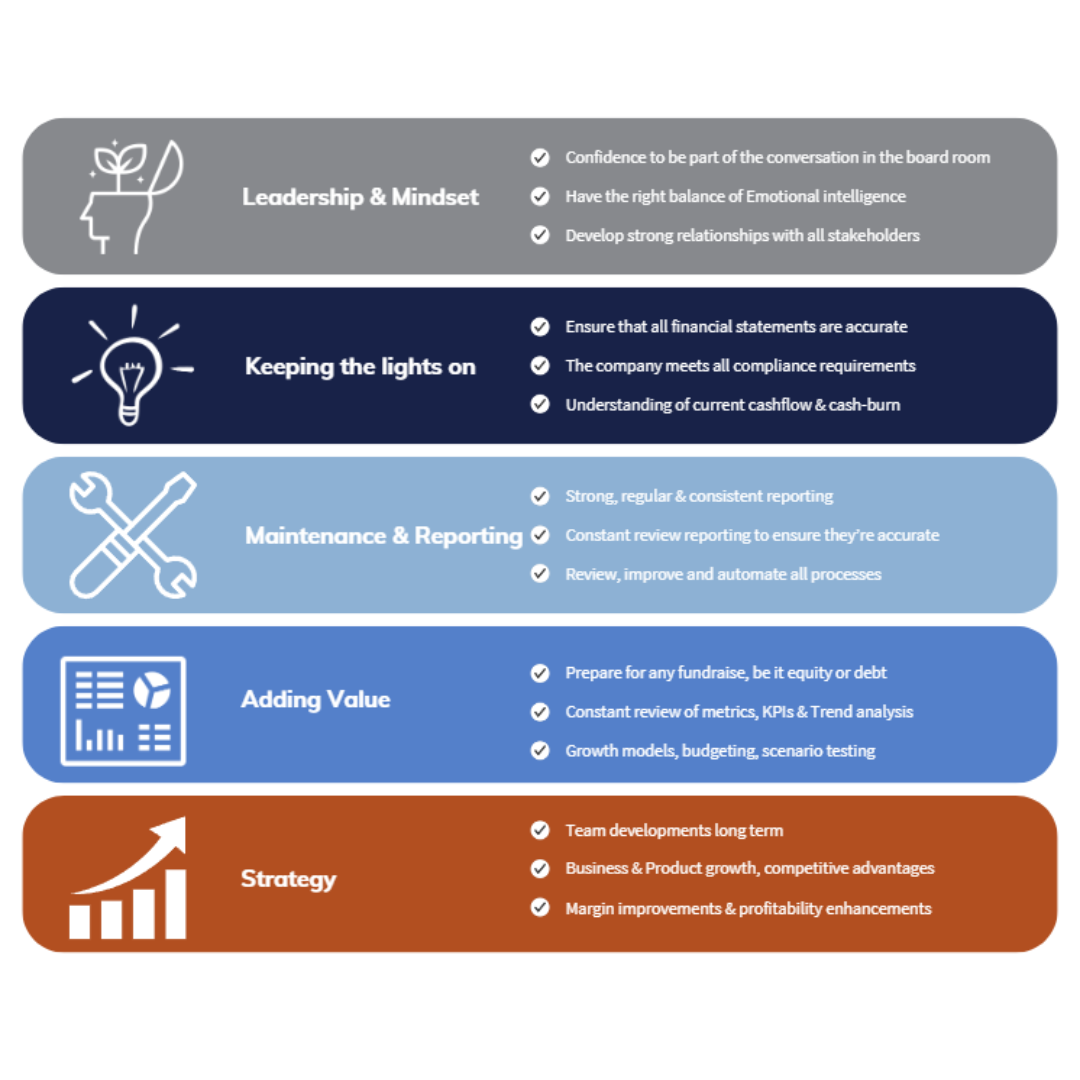
This is why one of the first stages of the FLF Framework is "Keeping the Lights On". You can't do anything strategic if you don't have a solid foundation first, both financial and non-financial KPIs and numbers.
4. They reset expectations
New CFOs who succeed are explicit early on.
They explain:
- What data can be relied on today
- What needs work
- How long improvement will realistically take
This honesty builds trust far faster than pretending everything is under control.
See "You’re Hired as CFO… and Inherit Everyone Else’s Mess" for more information on how to do this.
Why This Is a Leadership Issue, Not a Technical One
Poor data quality is rarely fixed by a clever model or a new tool alone.
It requires judgement.
Knowing what matters most
Deciding where to invest effort
Being willing to slow things down briefly to fix foundations
This is one of the moments where finance leaders move from being technically strong to strategically trusted.
What This Means for Aspiring CFOs
If you’re stepping into a senior finance role, assume data quality will be an issue.
Your job isn’t to make everything perfect immediately. It’s to create confidence that things are improving in a controlled, transparent way.
That means:
- Fewer numbers, done properly
- Clear definitions
- Consistent reconciliation
- Honest communication
Get this right, and credibility follows. Get it wrong, and every conversation becomes harder than it needs to be.
In startups and scaleups, numbers don’t need to be beautiful. They need to be reliable.
Once people trust the data, finance earns the right to influence decisions. Without that trust, even the best insights get ignored.
This is one of the most important problems new CFOs face, and one of the earliest to solve.
Want to become a confident, strategic finance leader in a startup within the next 12 months?
Here’s your plan:
- Subscribe to my YouTube channel and Newsletter for weekly practical tips and real talk about startup finance leadership.
- Read my book Financial Leadership Fundamentals to get clear on what’s expected of you and how to show up as a leader.
- Join the Financial Leadership Fundamentals course to fast-track your growth with structure, support, and strategy that works in the real world.