

Updated Finance Tech Stack Recommendations: Mar 2026
Mar 26, 2026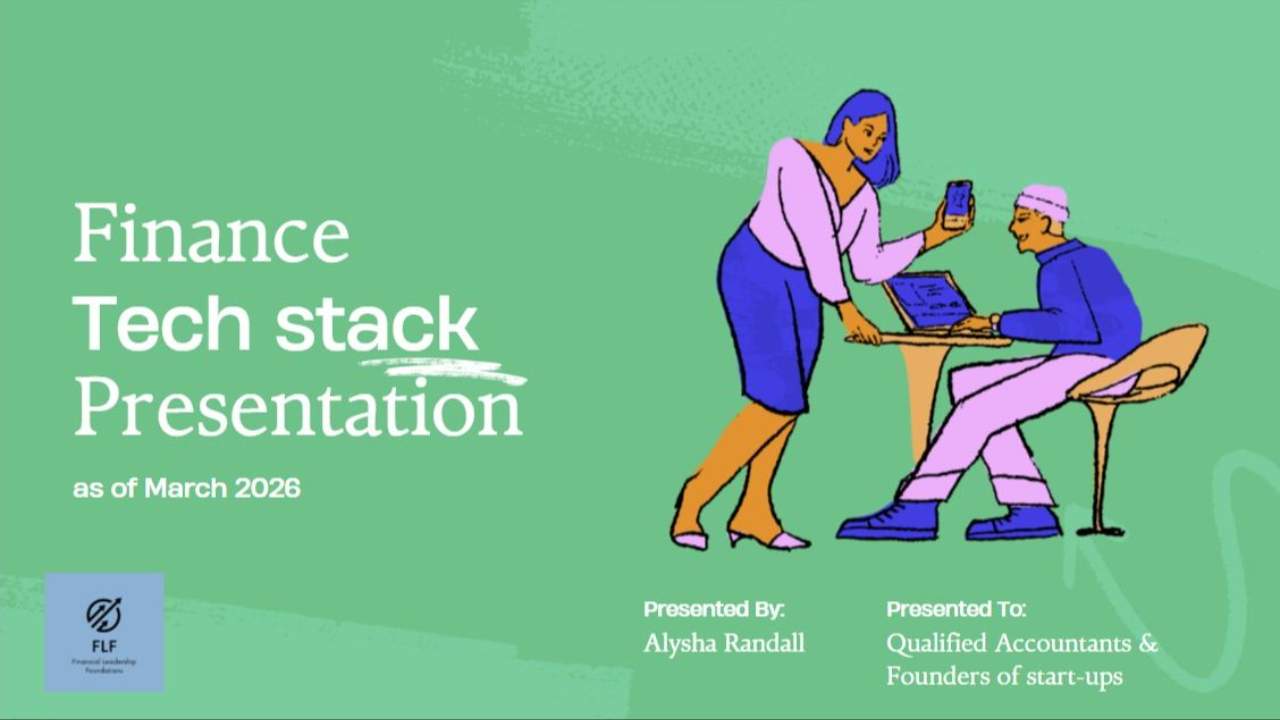
If you’re leading finance in a startup or scaleup, chances are you’ve asked yourself some version of this question:
Do we need better systems, or do we just need to fix our processes?
It’s a fair question. And it’s one I see founders and finance leaders wrestle with constantly.
New tools promise speed, automation, and control. But I’ve also seen plenty of businesses make things worse by layering software on top of broken workflows. The result is more complexity, more cost, and very little improvement.
That’s why I regularly revisit finance tech stack recommendations. Software changes quickly, but the underlying problem rarely does. The challenge isn’t knowing what tools exist. It’s knowing when to use them and when not to.
In my latest video, I walk through the finance tech stack I recommend across two dimensions:
-
By area of the finance function
-
By stage of business growth, from very early stage through to Series B+
This blog post is here to set the scene. The detail lives in the video.
Tools Don’t Fix Broken Processes
Before getting into software, there’s one point I’m very clear on.
Tools do not fix broken processes.
I’ve seen businesses invest in expensive systems expecting an instant improvement, only to find that the same problems show up faster and louder. Poor approvals, unclear ownership, messy data and inconsistent definitions don’t disappear just because you bought a new tool.
If anything, software amplifies whatever already exists.
That’s why any discussion about tech needs to start with workflows. End-to-end. Including the parts that sit outside finance. If you don’t step back and review how things actually work today, you’ll almost certainly end up disappointed with whatever you implement next.
The video goes into this in more depth, because skipping this step is one of the most common and costly mistakes I see.
Why Stage of Business Matters So Much
One of the biggest issues with generic tech stack advice is that it ignores context.
The systems that work at £300k of revenue are not the same ones that work at £3m. And what makes sense at Series A can quickly become limiting at Series B.
In the video, I talk through four broad stages:
-
Very early stage
-
Seed
-
Series A
-
Series B+
Each stage has different goals, constraints and risks. Your tech stack needs to support those realities, not fight them.
Early on, survival and simplicity matter most. Later, efficiency, scalability and investor confidence become far more important. Somewhere along the way, finance shifts from operational support to strategic partner.
Trying to future-proof too early usually wastes money. Leaving upgrades too late usually costs time and credibility.
Why I’ve Structured the Recommendations This Way
Rather than just listing tools, the video is structured to help you answer practical questions, such as:
-
Are we underbuilt or overbuilt for our stage?
-
Which tools are genuinely helping us scale?
-
Where are we relying on workarounds that won’t hold?
-
What should we be thinking about next, even if we don’t act yet?
I also talk openly about trade-offs. Some tools are excellent but expensive. Others are basic but perfectly adequate for longer than people expect. There’s no single “best” stack, only the right one for where you are now.
If you’re an aspiring CFO or Head of Finance, this is also about judgement. Knowing when to say yes to a system change, and when to push back, is a big part of stepping into a more senior role.
Who This Is For
This content is aimed at:
-
Finance leaders in startups and scaleups
-
Heads of Finance and first-time CFOs
-
Finance managers preparing for more responsibility
-
Anyone supporting founders through growth and fundraising
If you’re trying to build credibility, reduce friction, and avoid unnecessary complexity, this will be relevant.
Watch the Video for the Full Breakdown
Rather than trying to cover everything here, I’ve kept this post intentionally high level.
In the video, I go through:
-
Core accounting systems
-
Payables and spend controls
-
Payroll and people tools
-
Revenue and billing
-
Cash and treasury
-
Reporting, FP&A and BI
-
AI and workflow tools
-
And finally, how all of this changes by stage of growth
If you’re making decisions about your finance stack in the next 6 to 12 months, it’s worth watching through to the end.
Want to become a confident, strategic finance leader in a startup within the next 12 months?
Here’s your plan:
- Subscribe to my YouTube channel and Newsletter for weekly practical tips and real talk about startup finance leadership.
- Read my book Financial Leadership Fundamentals to get clear on what’s expected of you and how to show up as a leader.
- Join the Financial Leadership Fundamentals course to fast-track your growth with structure, support, and strategy that works in the real world.